How to Make a Wedding Seating Chart (Without the Family Politics)
A calm, step-by-step way to turn a finished guest list into a seating chart — table by table, without letting family politics run the room.
The AlmostWed team 9 min read
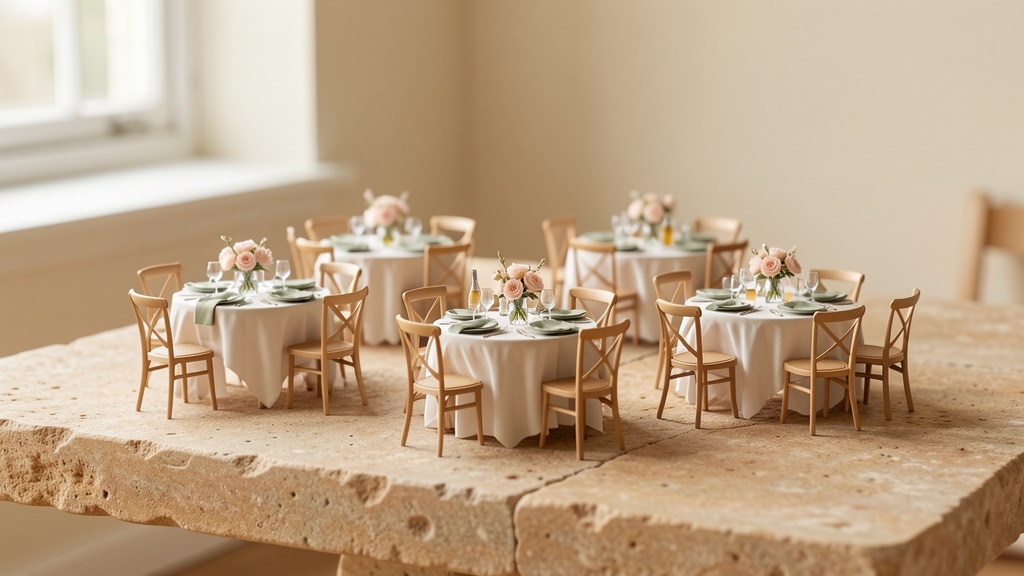
A calm, step-by-step way to turn a finished guest list into a seating chart — table by table, without letting family politics run the room.
The AlmostWed team 9 min read
The seating chart is the one wedding task everyone warns you about, and the warnings are half right.
The puzzle itself is not hard. What makes it feel hard is everything that gets dragged onto the board with it.
Here is the reframe that makes it manageable: a seating chart is not a diplomatic settlement. It is a simple question, asked once per guest — where will this person have the best evening?
Answer that honestly, table by table, and most of the “politics” resolves itself. This guide walks through the whole process in order: when to start, how to build it, and what to do with the genuinely tricky cases.
You cannot seat people you have not counted.
The chart begins where the RSVPs end.
Timing first
Later than you think. The single biggest seating-chart mistake is starting while the guest list is still moving.
2–3
weeks before
Start once you have
Every chart built on a moving list gets rebuilt, usually twice, usually at 11pm. If your RSVP date has not passed yet, spend your energy chasing replies instead — our guide to RSVP deadlines covers how to do that without awkwardness.
Sketching the big shapes early is fine: how many tables fit the room, where the family tables sit, whether you want a head table. Just do not place individual humans until the list is real.
The method
The order matters more than the tools. Anchors first, friends second, puzzles last — never the other way around.
1
Confirm the final guest count and get the real floor plan from your venue: how many tables fit, what shape they are, and how many seats each takes comfortably — not the number the brochure claims fits “at a squeeze.”
2
Decide your own table first: a sweetheart table for two, or a head table with the wedding party or close family. Everything else in the room orients around where you sit.
3
Parents, grandparents, and immediate family go nearest to you. If parents are divorced, give each their own table at equal distance — equal billing, no scorekeeping possible.
4
Fill the remaining tables with people who share a chapter of your life — school, university, work, the neighborhood. A table with a shared story talks all night. A table of leftovers checks their phones.
5
The handful of genuinely tricky placements — exes, feuds, the colleague who knows nobody — are easy once the rest of the room is set, because now you can see every option instead of guessing.
6
Keep one or two flexible seats at the biggest tables for the inevitable late change. Then declare it done. A seating chart is finished when it is good, not when it is perfect.
The furniture
The table shape quietly decides how conversation works. Neither is better — they just behave differently.
Round tables
Usually 8–10 seats
Everyone can see everyone, so one conversation can hold the whole table. Forgiving for groups where not everybody knows each other yet — nobody ends up stranded at the far end.
Long tables
Banquet or family style
Beautiful in photos and great for big friend groups, but conversation only reaches three or four seats in each direction. Seat close groups together, because the ends of a long table are their own little islands.
A practical middle path many venues suggest: long tables for the tight-knit groups, rounds for tables that mix circles. And whichever shape you use, fill tables to comfort, not to capacity — a table of ten with eight people feels generous; a table of ten with eleven feels like a negotiation over elbow room.
If you already know the headcount and comfortable table size, use the free wedding table calculator to calculate how many wedding tables you need before you start placing names.
The real puzzles
Almost every wedding has two or three of these. None of them needs drama — just a clear default you decide once.
Divorced parents
Two tables, equal distance from you, each hosting their own side of the family or their own friends. Do not seat them together for appearances, and do not seat one visibly “better” than the other. Symmetry ends the conversation before it starts.
Exes and old tensions
Different tables is enough. You do not need opposite corners of the room — that reads as staging and everyone notices. A comfortable buffer of one table and a shared drinks queue has resolved more history than any seating chart ever will.
Guests who know nobody
The colleague, the childhood friend, the plus-one you have never met. Never build a “leftovers table” out of them. Attach each one to your warmest, most welcoming table — one stranger at a friendly table becomes a guest; six strangers at one table stay strangers.
The kids question
A kids’ table works from about age six, and works even better with paper and crayons on it. Younger children sit with their parents — and those parents get seats near the exit, which they will quietly thank you for at the first meltdown.
Be careful with
The “singles table.” Seating every unattached guest together feels efficient and lands as a setup. Seat single guests with their friends like everyone else — who they know beats what their relationship status is, every time.
The one rule that survives contact with family
Seat people next to who they will enjoy,
not who they are related to.
Obligation seating — cousins with cousins, colleagues with colleagues, regardless of whether they have anything to say to each other — produces quiet tables and long evenings. Shared history produces the tables people do not want to leave.
Easy to avoid
Three patterns cause most of the seating stress — and none of them is about difficult guests.
Starting before the list is final
A chart built on “probably coming” is a draft wearing a finished chart’s clothes. Every late RSVP change ripples through three tables. Lock the list first; the chart itself takes an evening.
Designing for the critics
If your placement logic is “what will Aunt Marie think,” you are optimizing for the one guest who will find something to think regardless. Design for the eighty people who just want a good dinner.
Treating the printed chart as final
Someone will cancel on Thursday. Keep the chart somewhere you can change it in minutes — and remember an empty chair on the night harms nobody. Resist the urge to reshuffle the whole room for one gap.
Where AlmostWed fits
You can build a seating chart with sticky notes, a spreadsheet, or a planning tool — whatever keeps the two of you calm. AlmostWed is built for the part sticky notes cannot do: the chart reads from your live guest list, so when an RSVP flips or a plus-one gets a name, you see it where you are seating people instead of discovering it at the venue.
Dietary notes travel with each guest onto their seat, and the finished chart prints cleanly for the venue and the caterer.
Before you call it done
Good, then done. Nobody has ever left a wedding talking about the seating chart — which means yours worked.
Before you place the first card
Start about two to three weeks before the wedding, once your RSVP deadline has passed and the guest list is final. Sketching earlier is fine, but every chart built on “probably coming” gets rebuilt.
For a seated dinner over roughly 50–60 guests, yes — open seating creates a slow, awkward scramble and splits couples and families. For a small wedding, a standing reception, or a relaxed buffet, open seating can work fine.
Assigning tables is enough for most weddings — guests sort out the chairs themselves. Assign exact seats only where it matters: the head table, or a table where two guests should have a buffer between them.
A head table seats you with the wedding party or close family; a sweetheart table is just the two of you. Choose based on energy, not tradition: a sweetheart table gives you a moment of calm and makes visiting other tables easier.
Expect one or two. Keep a little slack — a table that seats ten with nine people at it — and make changes by swapping whole seats rather than reshuffling the room. A no-show on the day needs no fix at all; an empty chair harms nobody.
Tables connected to your live guest list, plus-ones, and dietary notes — so late changes take minutes, not evenings. Free to plan, no credit card required.
Free to plan · No credit card · $49 once to publish your guest site · Already have an account
We’d like to use Google and Meta cookies to see which of our ads bring couples here. Nothing is set unless you allow it, and you can change your mind anytime. Privacy policy