Questions to Ask Your Wedding Venue Before You Book
The unglamorous questions that save you from expensive surprises — about money, capacity, catering, timing, and what actually happens if it rains.
The AlmostWed team 8 min read
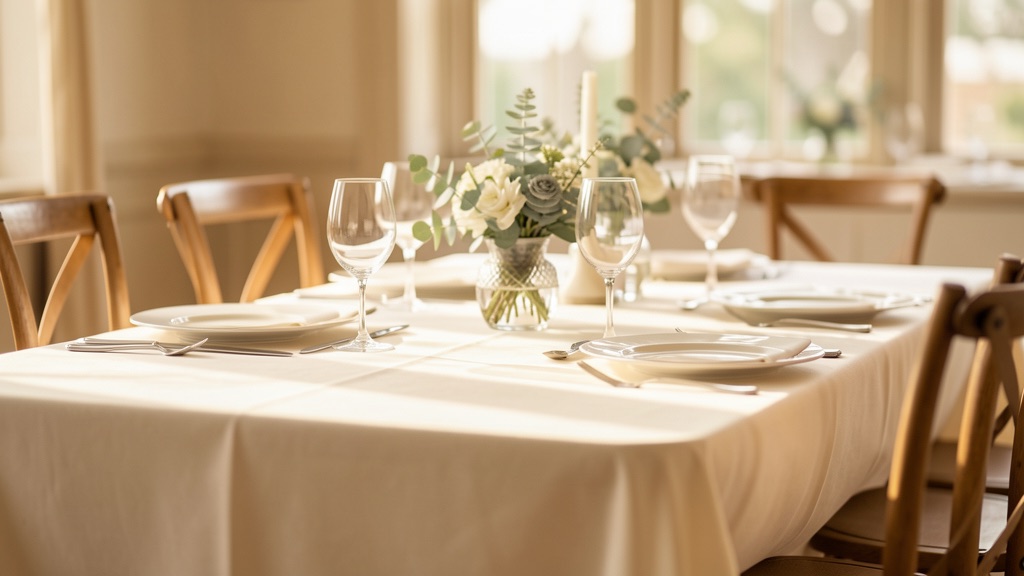
The unglamorous questions that save you from expensive surprises — about money, capacity, catering, timing, and what actually happens if it rains.
The AlmostWed team 8 min read
Venue tours are designed to be romantic, and they work.
The light is good, the garden is blooming, someone mentions where the string quartet usually stands — and twenty minutes in, you are mentally walking down that staircase.
That feeling is real and worth having. It is just not information. The venue is usually the single biggest line in a wedding budget and the contract underneath it decides more about your day than the staircase does. The couples who avoid expensive surprises are not less romantic — they simply asked the boring questions before signing instead of after.
Here is the full list, grouped so you can bring it to every tour.
Every venue looks perfect at golden hour.
The contract is where the truth lives.
Ask first
The goal of every question here is the same: turn the headline price into the real, final, everything-included number.
That last question is not paranoia. Venues do not hide these fees maliciously — they live in page four of the contract, and page four is exactly what you are there to read.
If you have already signed, use our guide to what to do after booking your wedding venue to turn those contract dates into a workable plan.
The room itself
“Capacity: 150” can mean 150 people standing with a drink, or 150 seated with room to dance. Those are different weddings.
The curfew question matters more than it sounds. A venue that is magical until 22:00 and a venue that parties until 02:00 are both wonderful — but they are different evenings, and you should choose the one you actually want rather than discover it in the contract.
Dinner rules
Catering rules are where venues differ most — and where the second-biggest budget line hides.
Write down that final-numbers date the moment you hear it — it quietly becomes the deadline your whole RSVP timeline works backward from. (We wrote a separate guide on setting an RSVP deadline around exactly this date.)
The day around the day
These are the questions your florist, band, and photographer will ask you later. Better to have answers now.
If it rains, where exactly does the ceremony happen? Can we see that room today?
Do not accept the rain plan as a sentence. Stand in the actual room. If the backup space would genuinely disappoint you, you are not booking a venue — you are booking a weather forecast.
Worth walking away from
Most venues are run by decent people who do this every weekend. These three patterns are the exceptions announcing themselves.
Vagueness about the total
If “so what would the full day cost for 90 guests?” cannot get a written answer, the number is being kept flexible for a reason — and the flexibility will not be in your favor.
“We’ll sort that out later”
On the rain plan, the timeline, or the changeover. Later means after you have signed, when your negotiating position is a memory. Anything that matters to you goes in the contract, or it does not exist.
Pressure to sign today
“Another couple is looking at this date” is sometimes true and always a test. A venue that will not give you a week to read a contract is telling you how the rest of the relationship will go.
After three tours, every venue blurs into one long corridor of chandeliers. Two habits keep the comparison honest:
Decide your top three criteria before the first tour. Capacity, budget ceiling, the outdoor ceremony, the late curfew — whatever the two of you genuinely care about. Judge every venue against those three first, and let the chandeliers be a tiebreaker instead of a criterion.
Write everything in one shared place, the same day. The answers to the questions above, the real total, how the coordinator made you feel. Memory is a terrible venue-comparison tool, and “wait, which one had the corkage fee?” is a conversation you only enjoy once.
Before the tour
Agree your three non-negotiables and your real ceiling — the all-in number, not the venue-hire number.
During the tour
Ask the boring questions, see the rain-plan room, and take photos of everything, including the car park.
That evening
Write the total cost and your gut feeling down while they are fresh. Then sleep on it. Twice.
The quiet rule of venue hunting
Fall in love on the tour.
Decide at the kitchen table.
The venue that survives both the golden-hour tour and the next morning’s spreadsheet is the right one. If a venue only works when the light is perfect, that is the light talking.
Before you sign
Popular venues book 12–18 months ahead for Saturday dates in peak season. If your date is flexible — a Friday, a Sunday, or off-season — six to nine months is often enough, and your negotiating position improves noticeably.
It varies enormously, which is exactly why you ask. Some venues include tables, chairs, linen, staff, and a coordinator; others rent you four walls and a meadow. Never compare two venues on the headline price — compare on the total cost of a finished wedding day.
Sometimes, but do the full math first. A raw space means separately renting catering, furniture, crockery, staff, sound, lighting, and sometimes toilets and power. Dry hire buys freedom more reliably than it buys savings.
On a peak-season Saturday, rarely. On off-season dates, weekdays, or late availability, often — and if the price is fixed, ask what can be included instead: extra hours, a menu tasting, or corkage waived. The answer is no only if you do not ask.
Commonly 20–50% of the venue fee to hold the date, with the balance due some weeks before the wedding. Whatever the number, get the refund and postponement terms in writing before paying anything.
Create your wedding, add the first names and invite your partner. Free to plan. No credit card.
Free to plan · No credit card · $49 once to publish your guest site · Already have an account
We’d like to use Google and Meta cookies to see which of our ads bring couples here. Nothing is set unless you allow it, and you can change your mind anytime. Privacy policy